
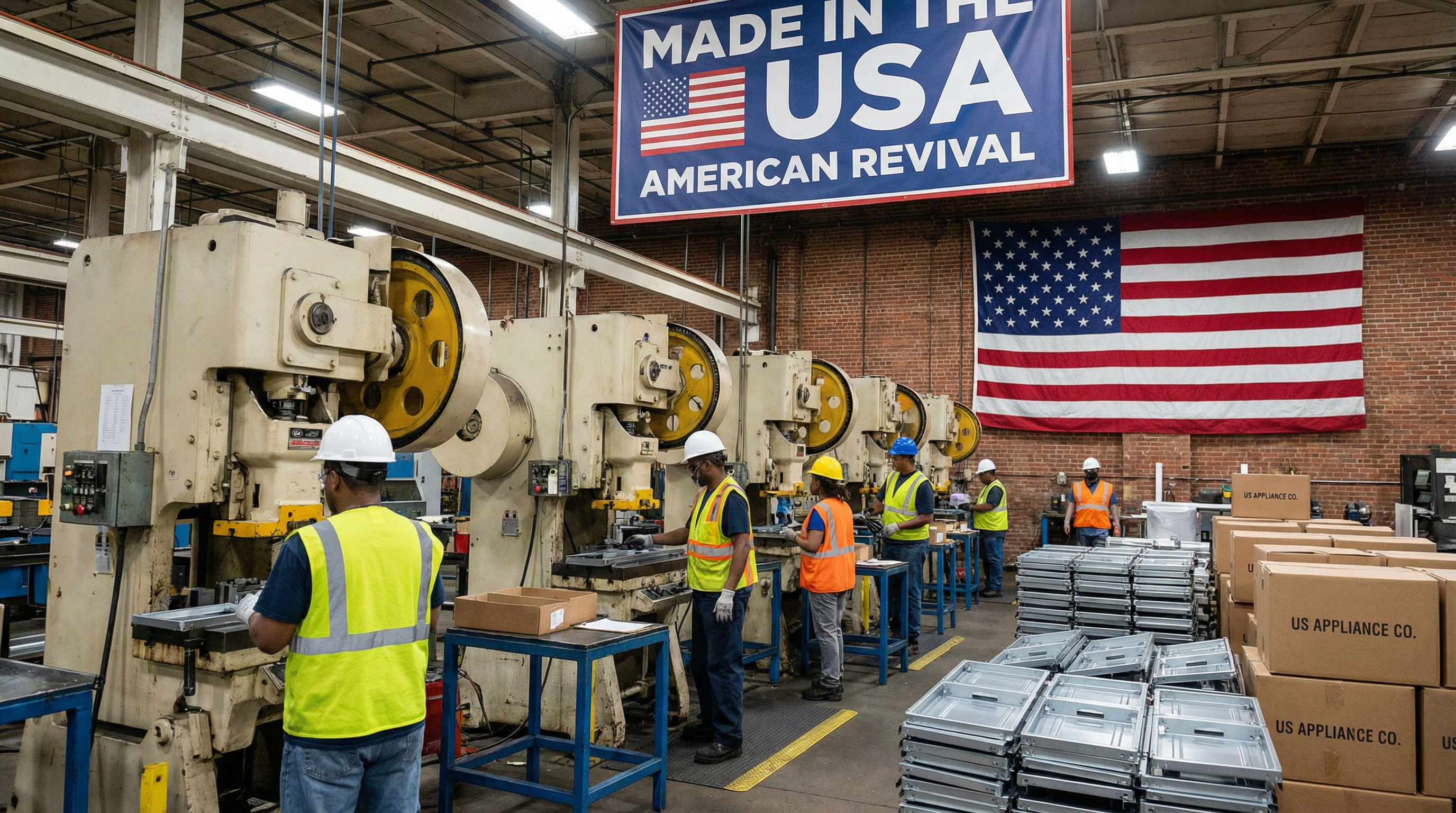
PROVIDENCE, RI – President Donald Trump's sweeping tariff policies are generating cautious optimism among Rhode Island manufacturers who hope the measures will level the playing field against foreign competitors and bring jobs back to the Ocean State after decades of industrial decline.
Rhode Island was once a manufacturing powerhouse, with textile mills, jewelry factories, and machine shops employing tens of thousands of workers across the state. Decades of free trade agreements and offshoring decimated those industries, leaving communities like Woonsocket, Central Falls, and parts of Providence struggling with unemployment and economic stagnation.
Now, with the Trump administration imposing significant tariffs on imported goods—particularly from China—some Rhode Island business owners see an opportunity for revival.
"For years, we've been competing against Chinese manufacturers who pay their workers a fraction of what we pay here and operate without the environmental and safety regulations we follow," said Thomas Ferrante, owner of a Cranston-based metal fabrication company that employs 47 workers. "These tariffs finally create a level playing field. We're already seeing more inquiries from customers who used to buy overseas."
The Rhode Island Manufacturers Association has cautiously welcomed the tariff policies, while noting that some members who rely on imported raw materials face higher costs. The organization estimates that the net effect on Rhode Island manufacturing will be positive if the tariffs remain in place long enough for businesses to make investment decisions.
"Reshoring doesn't happen overnight," said David Chenevert, president of the Rhode Island Manufacturers Association. "Companies need certainty before they invest in new equipment and hire workers. But if these tariffs signal a long-term shift in trade policy, we could see real growth in Rhode Island manufacturing over the next five to ten years."
Critics of the tariff policies argue that tariffs function as a tax on consumers and could trigger retaliatory measures from trading partners. Rhode Island's fishing and agricultural sectors, which export significant quantities of seafood and specialty crops, could face retaliation from countries targeted by U.S. tariffs.