
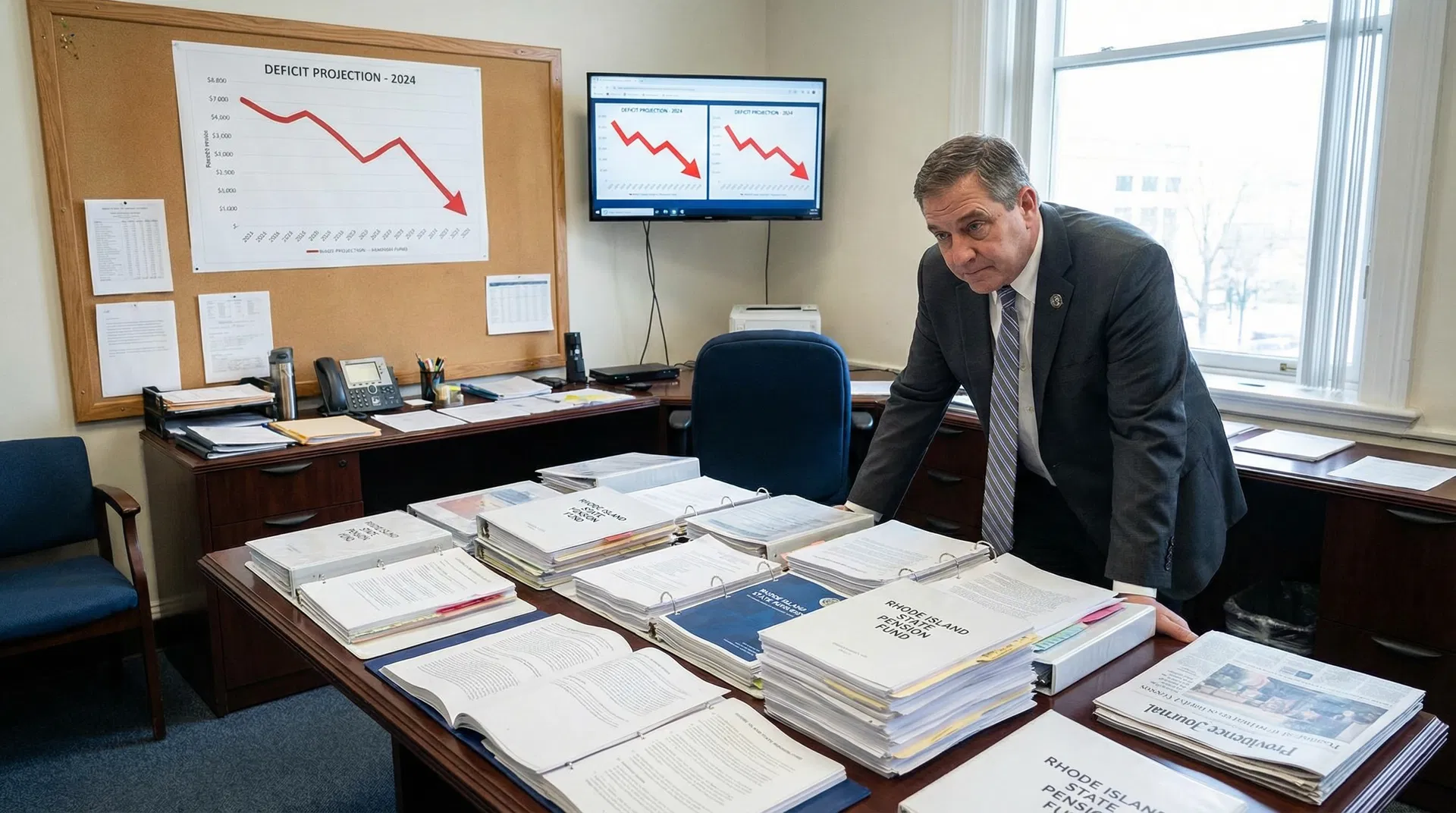
Rhode Island's state pension system faces renewed scrutiny after the latest actuarial report, released by the state retirement board, showed the unfunded liability has grown to $5.2 billion — a figure that represents approximately $4,900 for every man, woman, and child in the state and that fiscal analysts warn will continue to grow without structural reform.
The report, which covers the fiscal year ending June 30, 2025, found that the Employees' Retirement System of Rhode Island is funded at approximately 58 percent of its actuarial liability, meaning the system has assets to cover only 58 cents of every dollar it has promised to current and future retirees. The funding ratio has improved slightly from a low of 52 percent in 2012, when then-General Treasurer Gina Raimondo pushed through landmark pension reform legislation, but remains well below the 80 percent threshold that actuaries consider the minimum for a healthy pension system.
The Rhode Island Center for Freedom and Prosperity has called for a comprehensive review of the pension system's investment assumptions, which currently project an annual return of 7 percent — a figure that many financial analysts consider optimistic in the current interest rate environment. "If the actual return is 5 or 6 percent rather than 7 percent, the unfunded liability grows dramatically," said RICFP economist Justin Katz. "Rhode Island taxpayers are on the hook for a problem that keeps getting bigger."
State Treasurer James Diossa acknowledged the challenge but said the system is on a "sustainable trajectory" following the 2012 reforms. Critics countered that the reforms, while necessary, did not go far enough and that the state needs to consider additional changes including a shift to defined-contribution plans for new employees.
The pension situation is expected to be a major issue in the 2026 gubernatorial race, with several candidates already calling for a new round of reform.